Policy & regulation
Understanding Nova Scotia’s electricity-efficiency funding
Why electricity demand-side management planning should be distinguished from provincial departmental budgets.
Adapted for PB Energy’s Insights archive from David Brushett’s LinkedIn commentary. The date shown is the original post date.
The original post responded to questions about how changes to the provincial energy budget might affect efficiency programs. Its central distinction was between departmental spending and the electricity ratepayer-funded demand-side management planning process.
Separate the funding streams
Electricity DSM plans developed by EfficiencyOne undergo regulatory review. That process is different from a provincial department’s annual budget. It should not be assumed that every efficiency initiative has the same funding source or approval process.
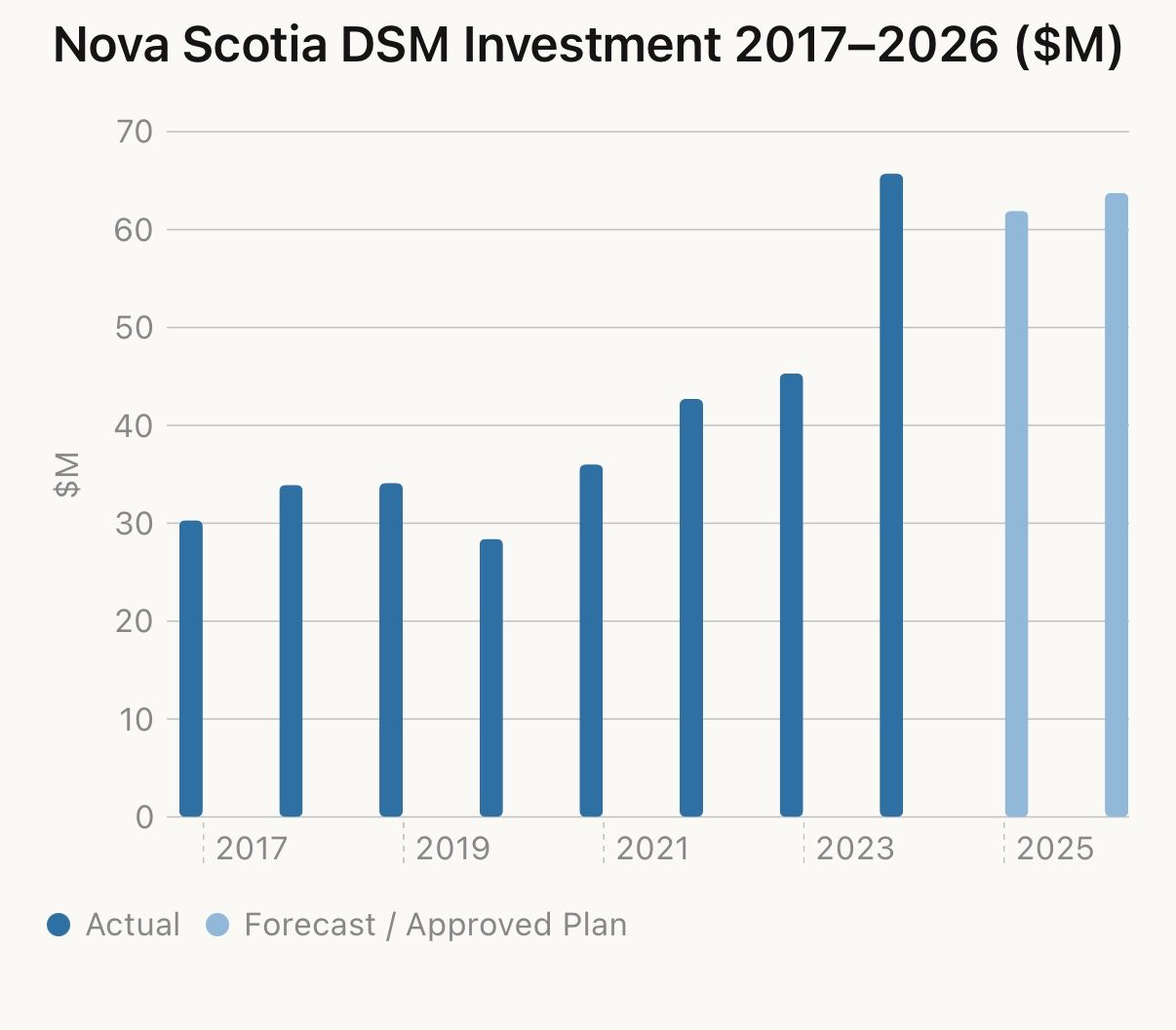
The original chart reported investment rising from $30.3 million in 2017 to $65.7 million in 2024, alongside an approved 2026 plan amount of $63.75 million. Actual expenditures and approved or forecast budgets should be compared with that distinction in mind.
Why planning certainty matters
Building owners and service providers need time to identify projects, assess costs and arrange implementation. Multi-year planning can provide a more useful basis for that work than short-term announcements alone.
At the time of the post, attention was turning to EfficiencyOne’s forthcoming 2027–2031 DSM plan. This article preserves that historical perspective; it does not describe the current status of the regulatory proceeding.