Grid planning
Falling battery costs change the planning picture
Lower storage cost assumptions and higher gas costs are reshaping the relative economics of Nova Scotia’s resource options.
Originally published on LinkedIn. This article reflects the information and perspective at the time of the original post.
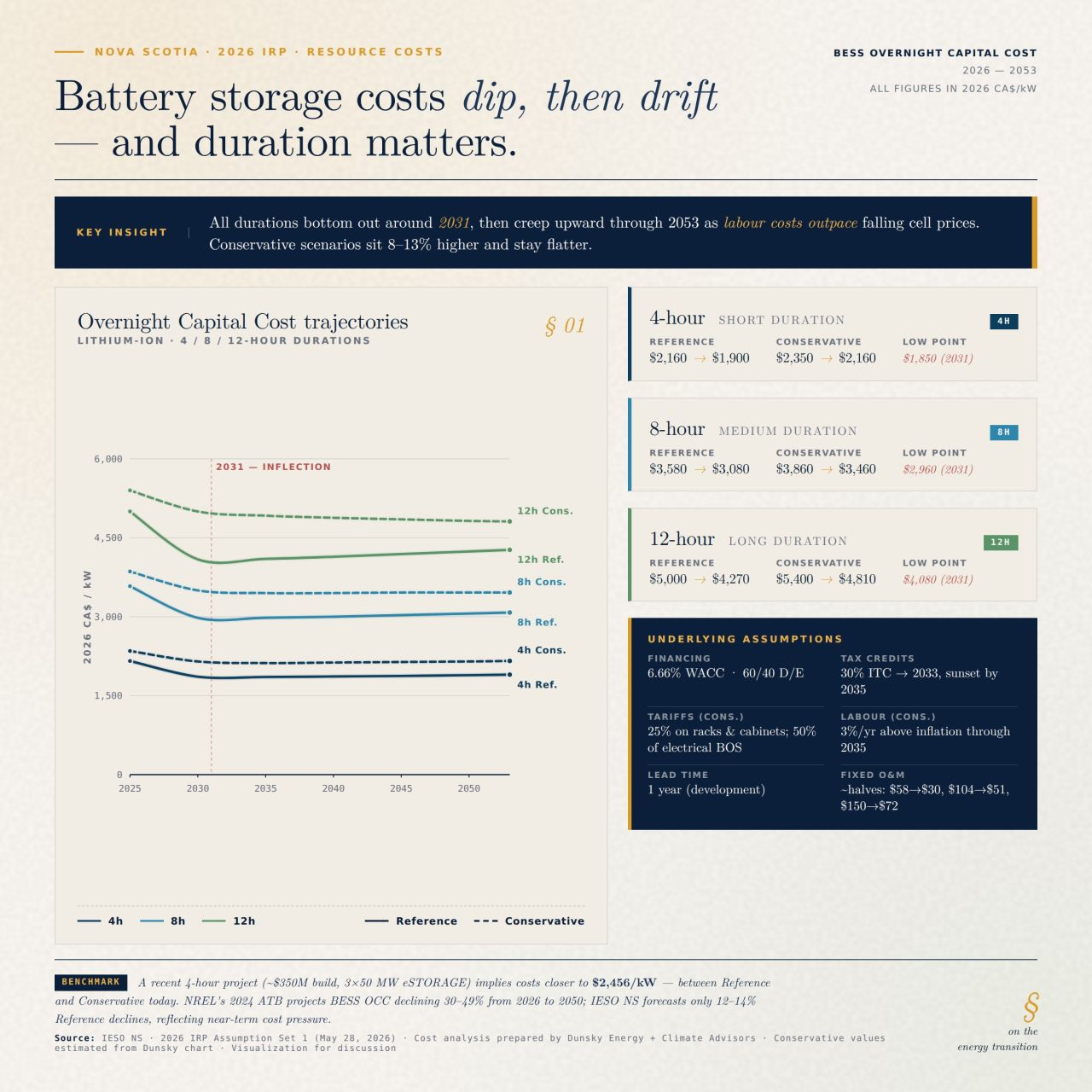
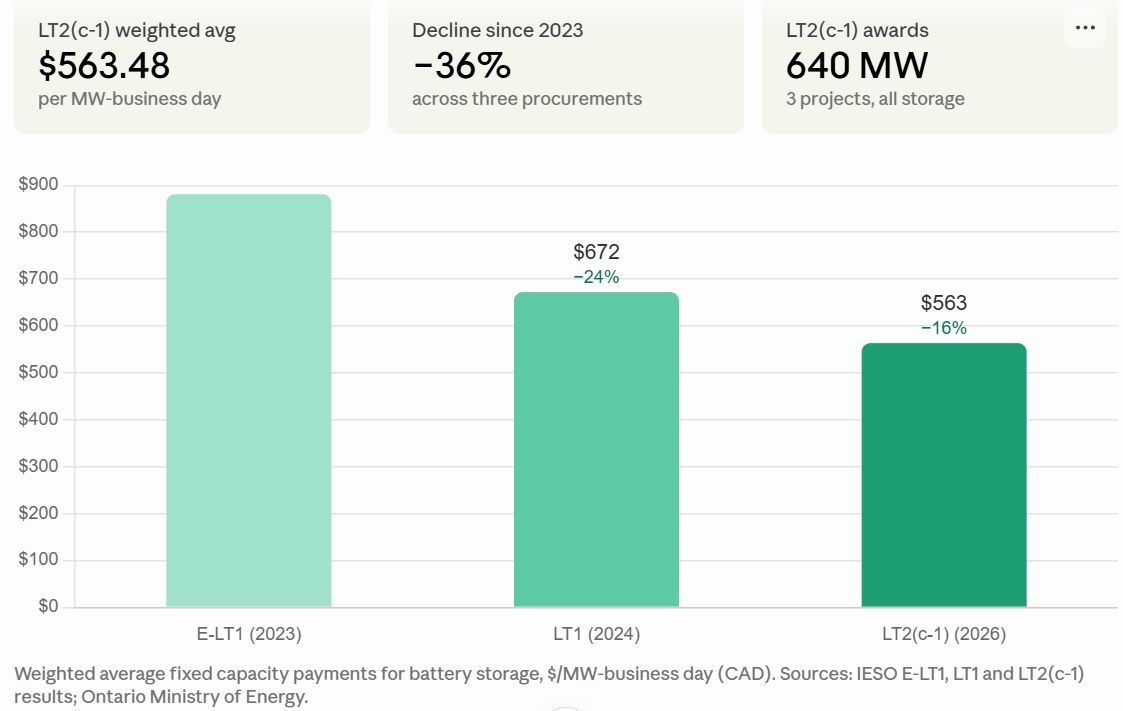
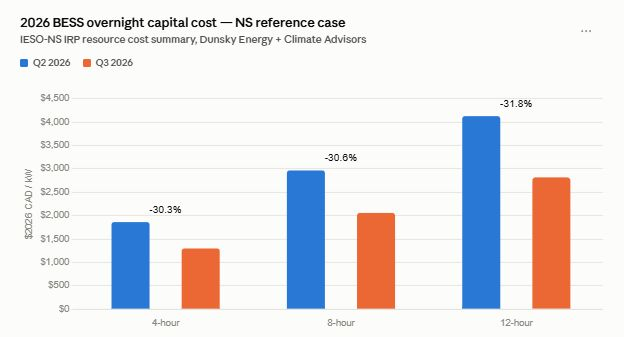
Battery cost assumptions for Nova Scotia's Integrated Resource Plan were revised sharply downward this week. Overnight capital costs for 4-hour, 8-hour, and 12-hour BESS projects are now assumed to be roughly 30% lower than they were last quarter, a significant shift for how batteries compete against other resources. The revision follows the shockingly low prices that came out of Ontario's LT2 procurement this summer.
Gas assumptions moved in the opposite direction. Reciprocating gas engine capital costs were revised upward by about 25%, and natural gas price assumptions increased as well. Together with the battery revision, that meaningfully improves the relative economics of storage.
Why this matters: IESO Nova Scotia is developing the Integrated Resource Plan, the long-term plan for our electricity system that will guide decisions about which generation resources get procured in the coming years. The cost assumptions feeding that model shape what the plan recommends, and ultimately what gets built. I wrote a few months ago about why getting these assumptions right matters: https://lnkd.in/gyNTTfKK. (opens in a new tab)
More on the Ontario procurement that informed the revision: https://lnkd.in/gruchdVF (opens in a new tab)