Grid planning
How battery cost assumptions shape electricity planning
Long-term storage cost assumptions can influence procurement, renewable integration and the role of customer-owned resources.
Originally published on LinkedIn. This article reflects the information and perspective at the time of the original post.
The Nova Scotia Integrated Resource Plan, being developed by IESO Nova Scotia, will guide electricity procurement for years to come, helping determine how the province meets load growth, complies with emissions requirements, and keeps system costs low.
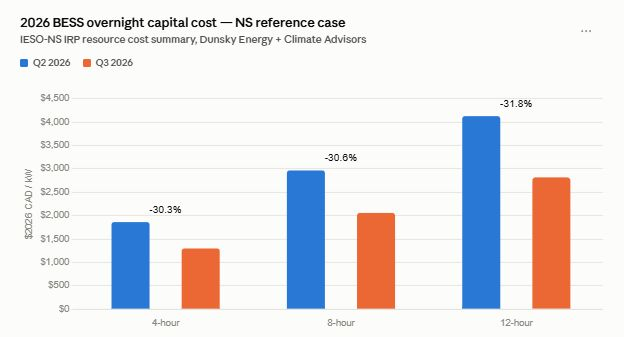
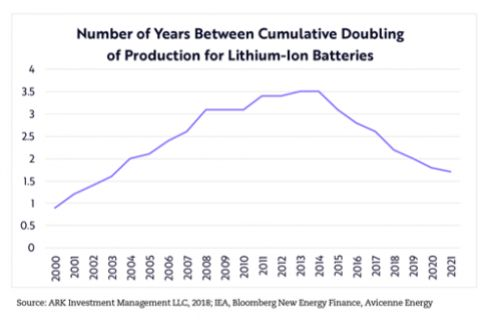
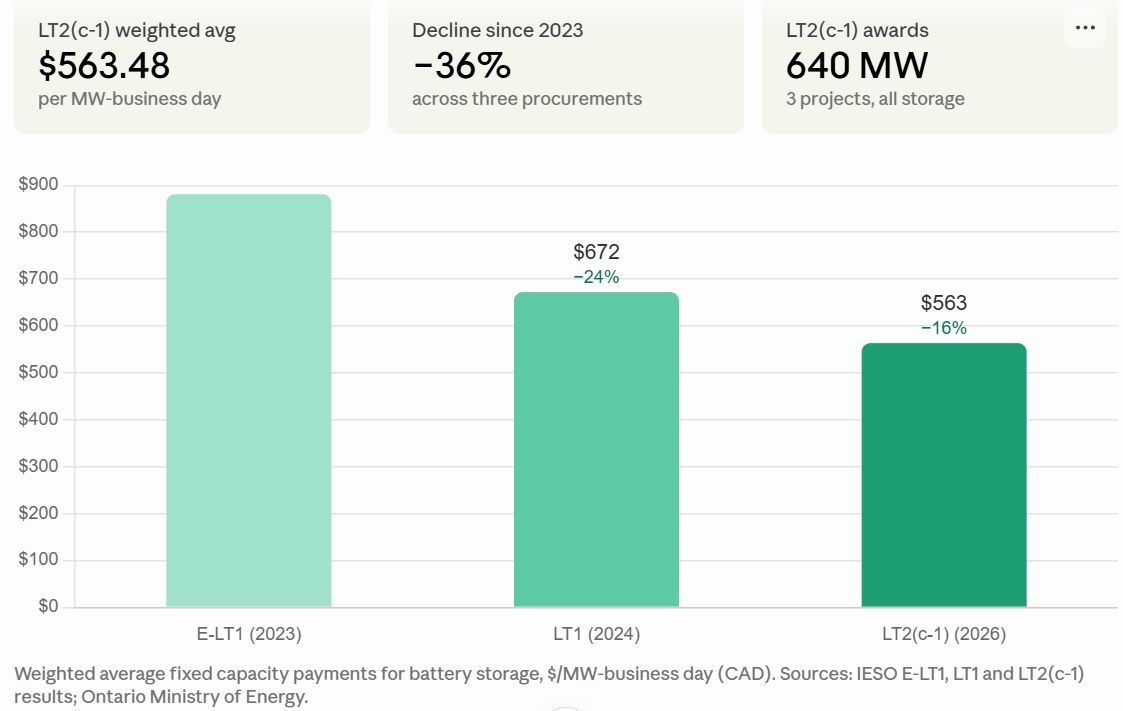
One of the harder parts of long-term planning is projecting costs for rapidly improving technologies. Battery storage is a clear example, costs have fallen ~90% since 2010, with another 31% drop in 2025 alone. Forecasting the next 25 years is genuinely difficult, so planning frameworks often take a conservative approach.
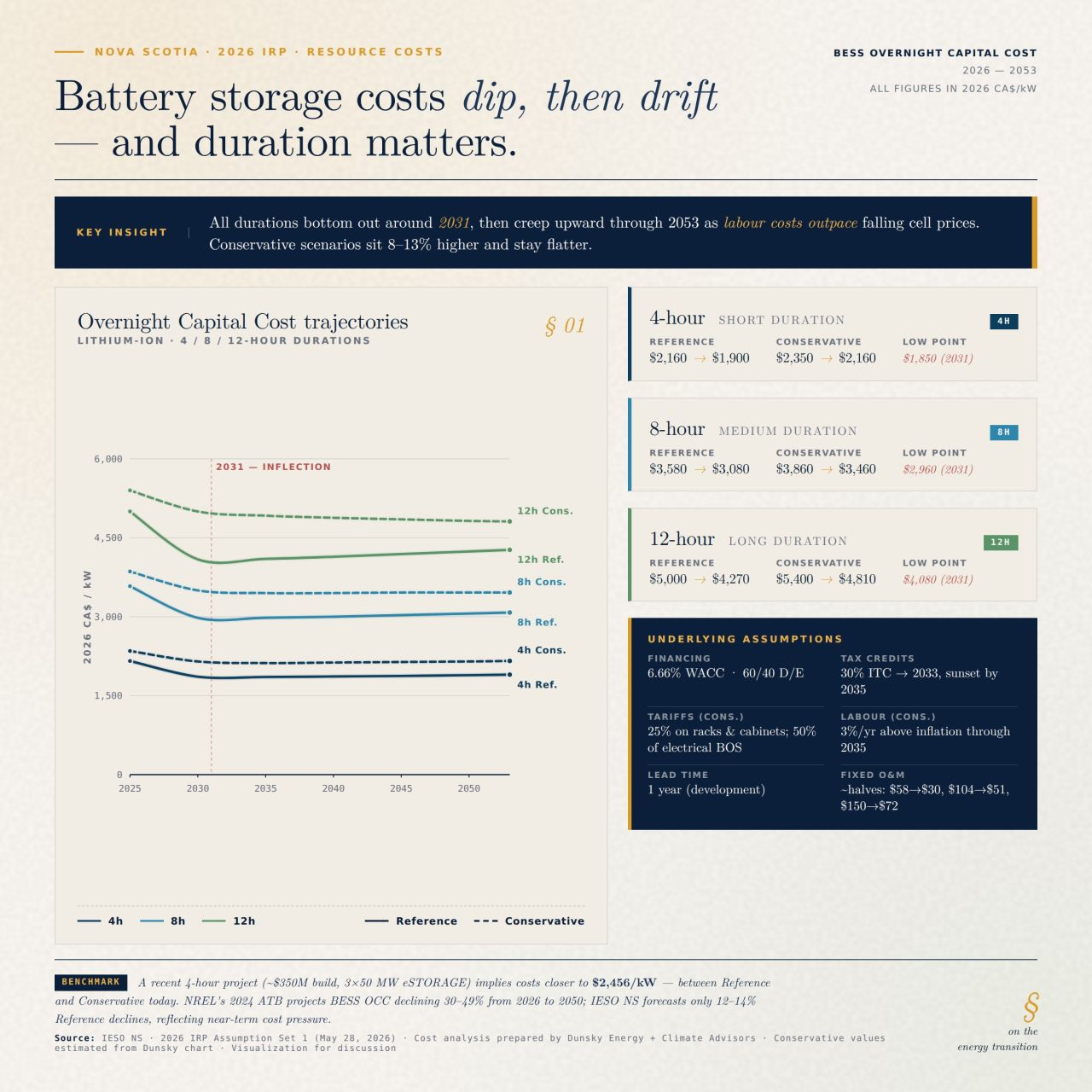
The 2026 IRP is a useful illustration. The Reference Case shows battery costs declining through 2031, then gradually increasing through 2053.
National Laboratory of the Rockies, formerly NREL’s 2024 ATB projects 30–49% declines over a similar period; the IRP assumptions land closer to 12–14%.
Getting the cost trajectory wrong in either direction creates problems.
If costs fall faster than assumed, plans may under-build storage and lean too heavily on other resources.
If costs don't fall as expected, plans built on optimism may strand investment or miss savings targets.
That's what makes assumptions worth understanding alongside the results.
This is especially important for storage, solar integration, demand-side management including strategic electrification, and the future role of distributed energy resources.
See link below for complete list of 2026 Nova Scotia IRP assumptions https://lnkd.in/efKKFHRf (opens in a new tab)