Energy management
Why energy efficiency program costs are changing
Diverging costs across residential, small business and large business programs point to opportunities for the next generation of DSM.
Originally published on LinkedIn. This article reflects the information and perspective at the time of the original post.
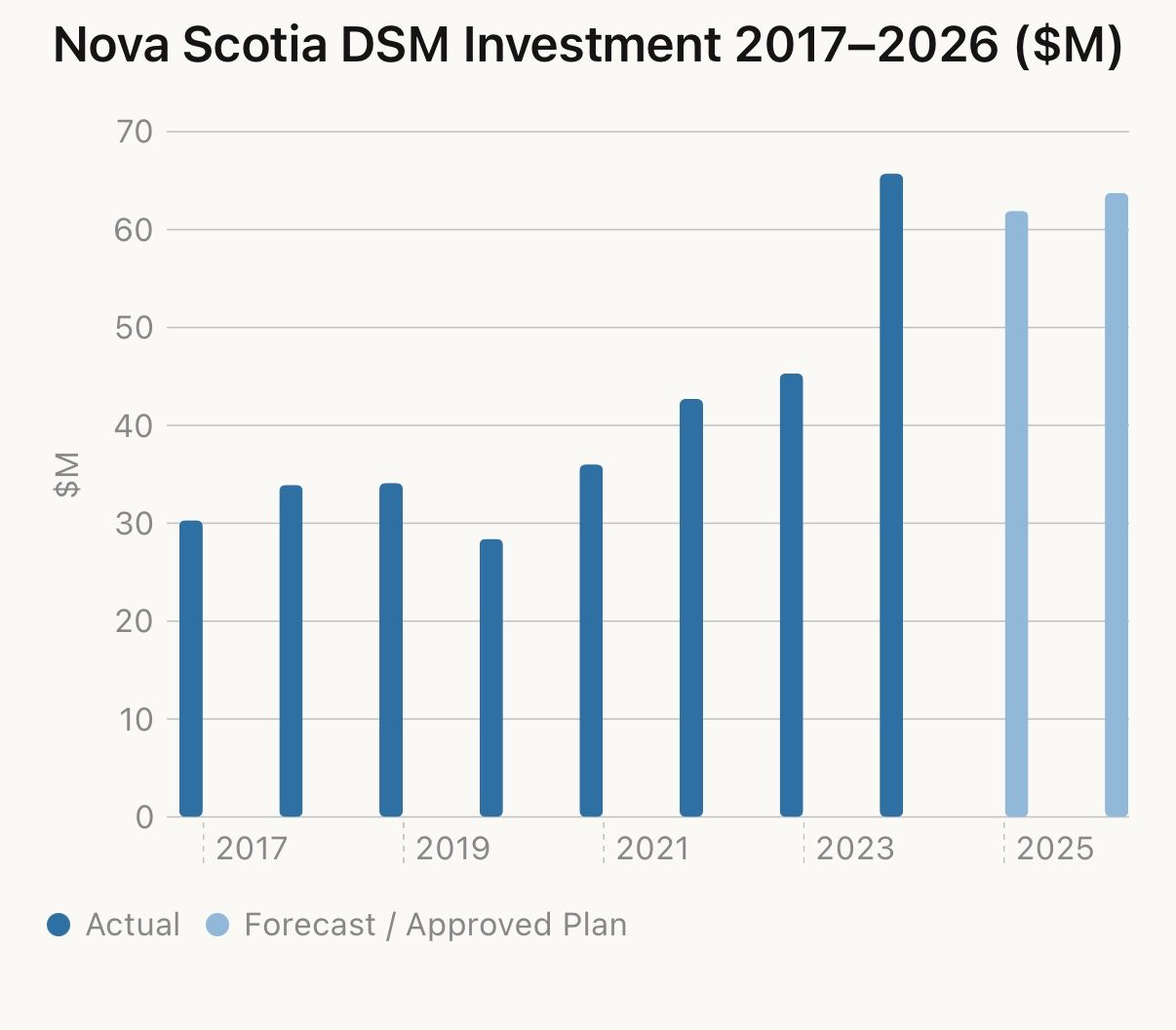
I’ve been digging into Nova Scotia’s historical DSM data to better understand current trends and where the energy efficiency community needs to focus its efforts next to keep driving value to ratepayers across all rate classes. As a national leader with one of the most transparent DSM systems, Nova Scotia gives a clear view of trends that will likely show up across Canada.
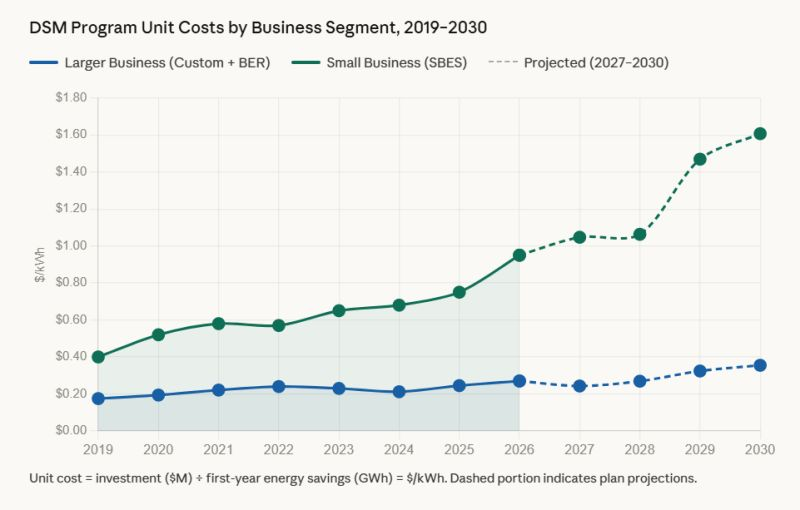
We also have a strong base of companies here, which creates a real opportunity to develop solutions locally and scale them nationally. One trend stands out: unit costs are diverging across sectors. Unit cost is a core DSM metric, the program investment required to achieve one unit of energy savings (typically $/kWh saved in the first year). In simple terms, it’s what it costs to incentivize a participant to save a kilowatt-hour.
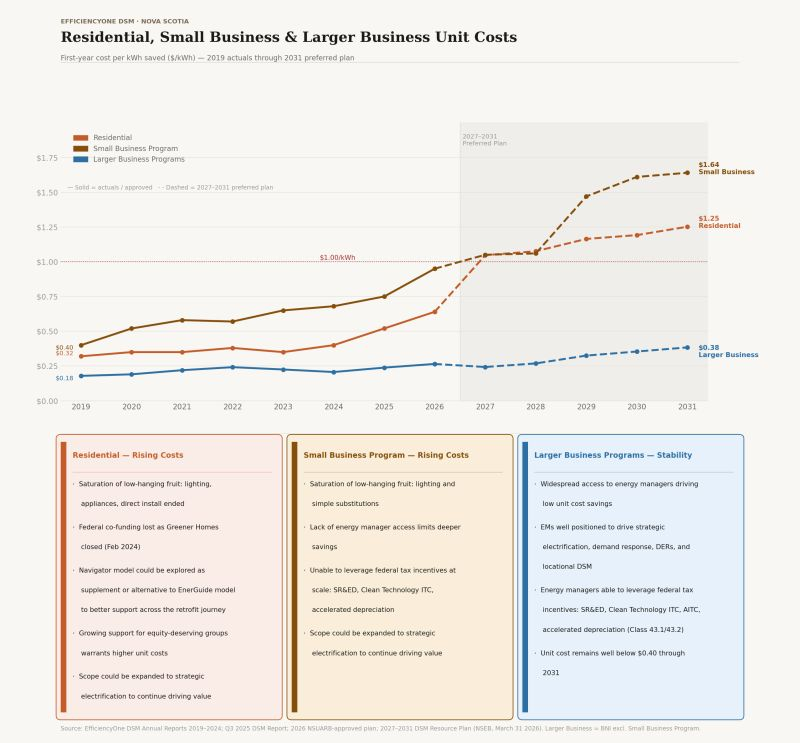
The data shows: -Residential unit costs are rising steadily -Small business costs are rising even faster -Large business programs remain relatively stable and low-cost The chart below highlights some of the underlying reasons for these trends which should be viewed as a signal and an opportunity rather than a problem.
Three of the primary drivers of this discrepancy are: changes in federal support, measure saturation, and inequitable access to expertise/capacity across sectors.
There are also opportunities arising to increase focus on new and untapped areas of DSM like strategic electrification, DERs, and load management.
If you’re building solutions in this space, I’d be interested to hear what you’re working on.