Electrification
A heat-pump emissions milestone in Nova Scotia
A historical comparison shows how a cleaner electricity supply changes emissions from electric heating.
Informational rewrite based on the topic and available supporting material from David Brushett’s original LinkedIn post. The date shown is the original post date; wording was reviewed in September 2026.
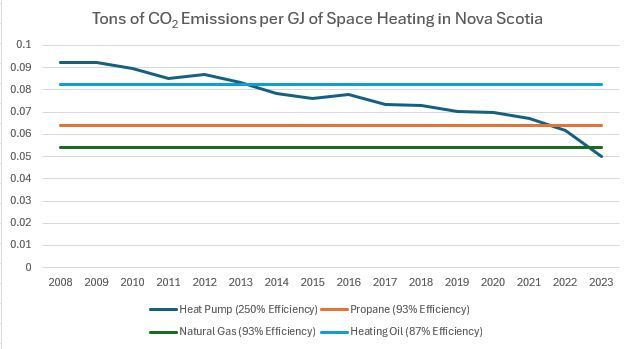
The accompanying chart compares estimated CO₂ emissions per gigajoule of space heating in Nova Scotia from 2008 to 2023. It illustrates how changes in electricity generation affect the emissions associated with heat pumps.
The assumptions matter
The chart assumes a heat pump delivers 2.5 units of heat for each unit of electricity consumed. It compares that with stated efficiencies of 93% for natural gas and propane, and 87% for heating oil.
Under those assumptions, the heat-pump line falls below the three fuel-heating lines by 2023. This is the milestone shown in the historical analysis, not a claim that every installation has identical performance.
Actual results depend on equipment, weather, building heat demand and backup heating. An average annual comparison also differs from an analysis of electricity emissions at a particular hour.
The underlying insight is that efficient electric heating can benefit as its electricity supply becomes cleaner, without replacing the heating equipment each time the grid improves.