Electrification
Heating oil and household exposure to volatile energy prices
Why Atlantic Canada’s heating-oil dependence matters for affordability and energy security.
Adapted for PB Energy’s Insights archive from David Brushett’s LinkedIn commentary. The date shown is the original post date.
Heating-oil prices can place substantial pressure on household budgets. Atlantic Canada’s comparatively high reliance on oil heating makes fuel-price volatility particularly important for the region.
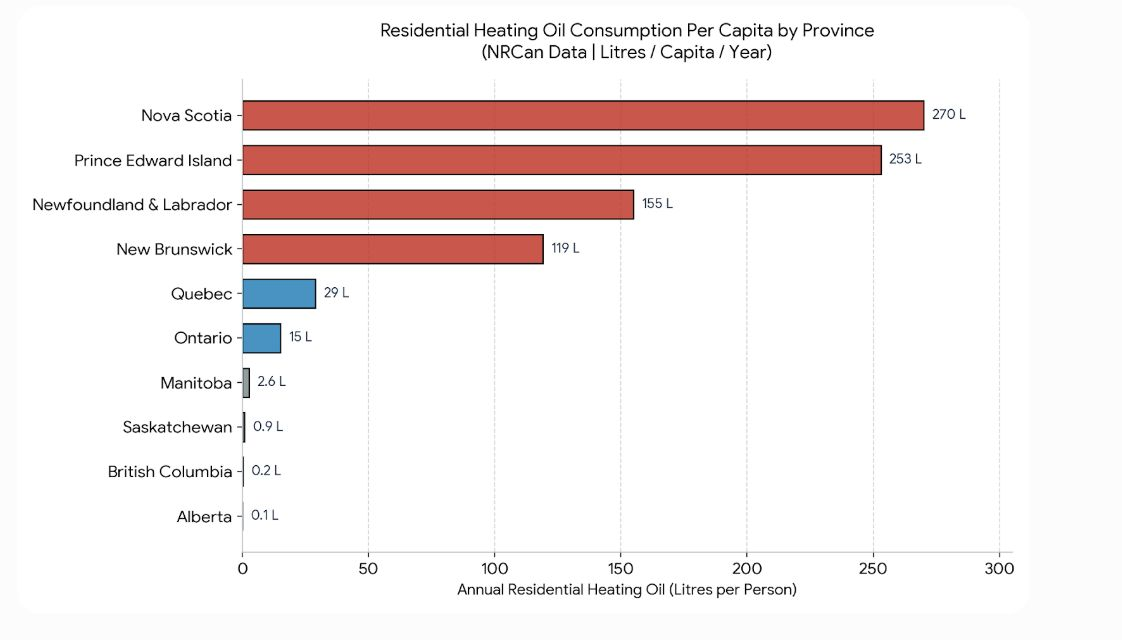
The original post discussed elevated Halifax heating-oil prices ahead of the heating season. The accompanying graphic addresses a different question: how residential heating-oil consumption per person compares between provinces.
What the chart shows
The supplied chart places the four Atlantic provinces above the other provinces shown. It is labelled as Natural Resources Canada data, but does not state the underlying year, so it should be read as the comparison accompanying the original post rather than as a current statistical release.
Reduce exposure as well as consumption
Energy-efficiency improvements can lower the amount of heat a home needs. A suitable heat-pump installation can reduce the amount of oil needed to supply that heat. Together, those changes can reduce exposure to oil prices, although costs and savings depend on the building, equipment, electricity tariff and remaining backup heat.
The practical priority is to plan before heating equipment fails: assess the building, address avoidable heat loss and compare replacement options using the household’s actual energy use.