Energy management
Energy performance at Halifax Central Library
A historical results sheet shows how lighting, controls and ongoing management can improve a prominent public building.
Informational rewrite based on the topic and available supporting material from David Brushett’s original LinkedIn post. The date shown is the original post date; wording was reviewed in September 2026.
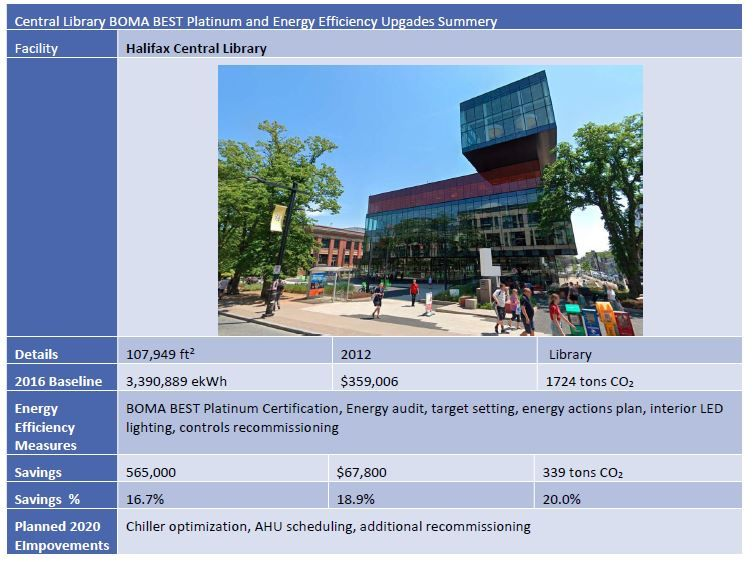
Halifax Central Library’s historical energy-efficiency summary shows why building performance deserves attention after opening. The sheet identifies energy auditing, target setting, an energy action plan, interior LED lighting and controls recommissioning, alongside BOMA BEST Platinum certification.
Results in context
Against its stated 2016 baseline, the sheet reports energy savings of 16.7%, cost savings of 18.9% and CO₂ reductions of 20%. These are the figures in the supplied historical summary, not a current performance assessment.
The same document identifies chiller optimization, air-handling-unit scheduling and further recommissioning as planned 2020 improvements. Those plans should not be read as confirmation that every measure was subsequently completed.
The practical lesson is that efficient operation requires continued attention to schedules, controls and actual building use. The case study concerns Halifax Central Library and the municipal building-management effort behind it.