Energy management
How DSM could help unlock deep energy retrofits
Three opportunities to connect demand-side management with deeper building retrofits: resource stacking, project support and better data.
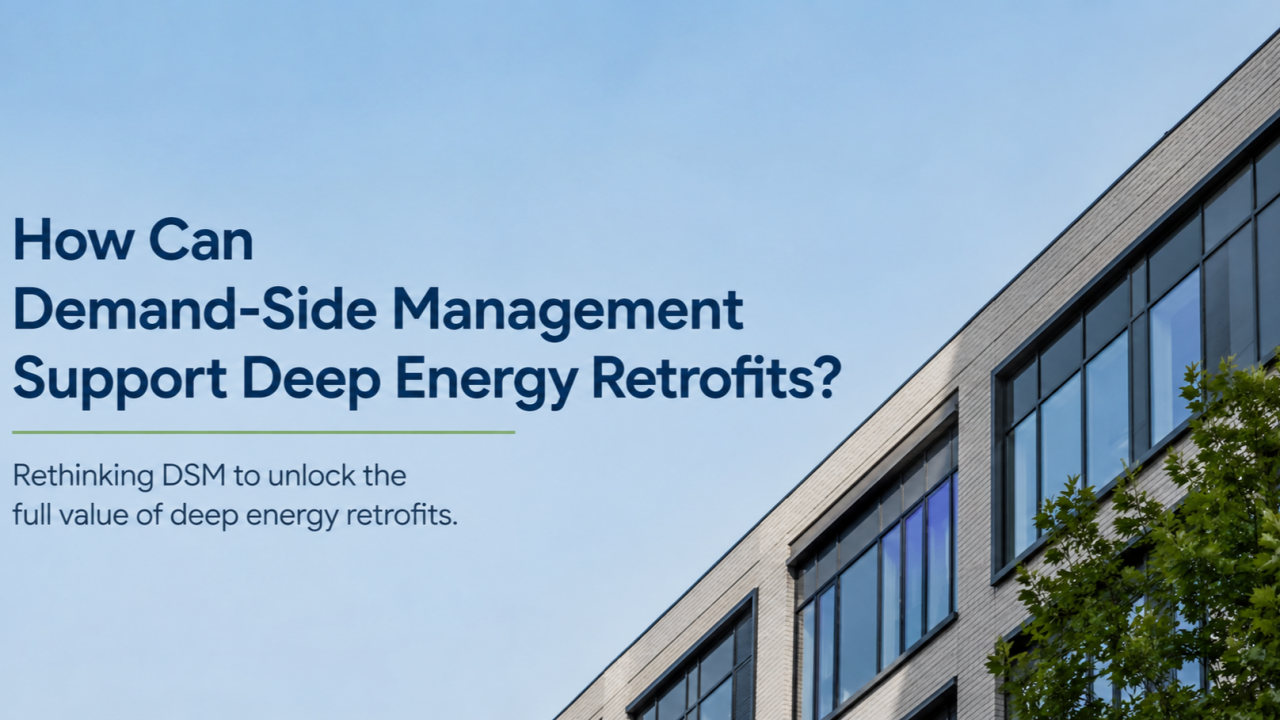
Originally published on LinkedIn. This article reflects the information and perspective at the time of the original post. This is the introductory post; the longer article is linked from the original LinkedIn post below.
In June, Halifax welcomed hundreds of retrofit professionals from across Canada for the 6th Annual Retrofit Canada Conference. The discussions reflected growing momentum behind deeper, more comprehensive building retrofits. Coming from a background in demand-side management, the event left me thinking about a related question: How can DSM better align with federal retrofit initiatives and help unlock the broader value buildings can provide to the electricity system?
The timing is right for that conversation. Amendments to Nova Scotia’s Public Utilities Act expanded the definition of DSM to include demand response and strategic electrification, creating an opportunity to think beyond electricity savings alone.
DSM cannot close the economics gap for deep retrofits by itself. But it could become a more effective partner by recognizing eligible grid-value streams, supporting the project-development capacity needed to access federal funding, and making useful building and energy data easier to apply.
In my latest article, I explore three ways DSM could help more deep retrofit projects move from concept to construction: Integrated resource stacking, project-enablement support, and better data access.