Funding & finance
The incentives changing commercial heat pump economics
Considering available incentives when equipment reaches the end of its life can change the business case for electrification.
Originally published on LinkedIn. This article reflects the information and perspective at the time of the original post.
If you follow me, you know I post a lot lately about beneficial electrification in Nova Scotia, how it improves energy security, affordability, and emissions while enabling more renewables on the grid. So how do we actually accelerate it? The good news: there are major federal incentives available until 2034 for commercial businesses adopting heat pumps. (Note: The exact same incentives also apply to solar and batteries). The bad news: most businesses and contractors don't know about them.
Projects are moving forward across Nova Scotia without claiming what they're entitled to or systems are being selected based on capital cost estimates that don't factor these in.
Part of the solution is education, getting the word out to businesses, contractors, engineers, and accountants.
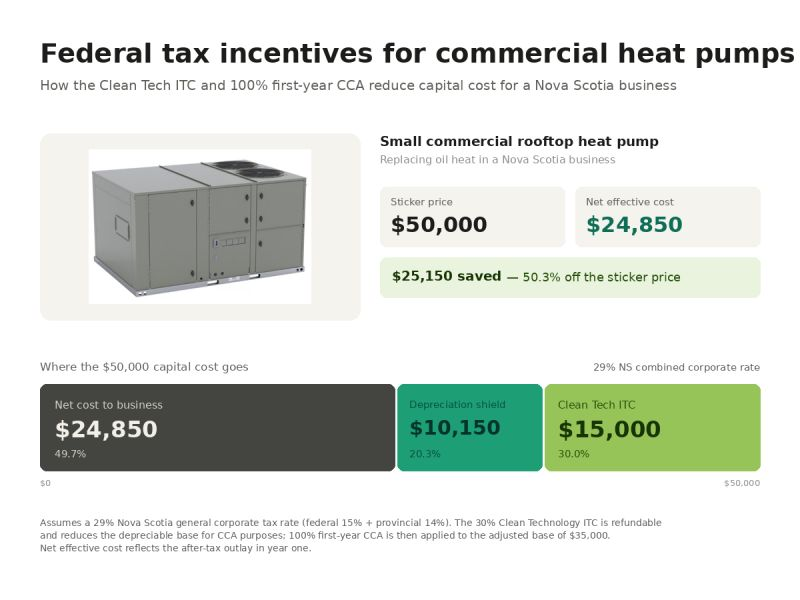
The example above shows how a typical business at a 29% marginal tax rate can cut heat pump costs by more than 50%. Factoring these incentives into HVAC end-of-life replacements or new construction can meaningfully shift the decision toward heat pumps. Nova Scotia is already the leading Canadian Province for heat pump adoption due in part to high heating oil penetration and lack of access to inexpensive natural gas. Let's build on that leadership!