Electrification
How well-managed electrification can help electricity rates
Timing new electricity use to lower-cost hours can help recover grid costs while managing peak-demand impacts.
Originally published on LinkedIn. This article reflects the information and perspective at the time of the original post.
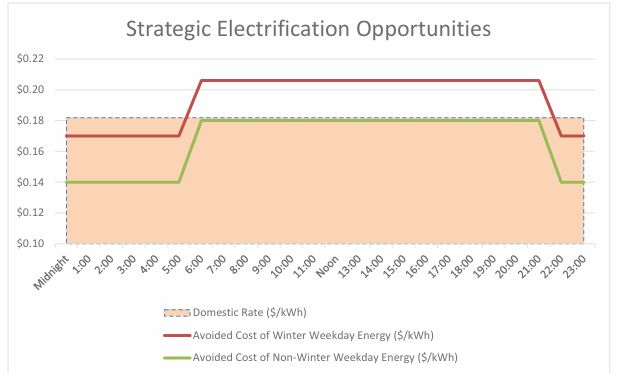
Nova Scotia Power shared a helpful chart in a recent regulatory filing that illustrates how Strategic Electrification can create value for customers and potentially put downward pressure on electricity rates in Nova Scotia. Residential customers in Nova Scotia generally pay the same rate for electricity throughout the day and year, shown by the dotted line.
The red and green lines represent Nova Scotia Power’s avoided energy cost during winter and non-winter weekdays, in other words, the estimated cost of supplying an additional kilowatt-hour at different times of day. During higher-cost periods, particularly winter daytime and evening hours, the cost of additional electricity can be greater than the residential rate.
During lower-cost periods, including overnight hours and much of the non-winter season, as well as summer and winter weekends (not shown), the cost can be well below the rate customers pay.
This creates an opportunity for Strategic Electrification. New electricity use from activities such as EV charging, hot water heating, heat pumps and industrial processes can be managed or scheduled for lower-cost hours. When additional electricity is sold for more than it costs to supply, the resulting revenue can help recover costs that would otherwise need to be collected through electricity rates.
All else being equal, and provided that program costs and peak-demand impacts are kept low, well-managed electrification can benefit both participating customers and the broader electricity system.