Electrification
Does Nova Scotia need an electrification strategy?
Clean power needs somewhere to go. Beneficial electrification should be part of the province’s energy planning.

Originally published on LinkedIn. This article reflects the information and perspective at the time of the original post.
The federal government's new National Electricity Strategy aims to double electricity production and electrify transportation, heating, and industry. NS is preparing a major clean electricity expansion: 2.4 GW of onshore wind by 2035, hundreds of MW of solar, and early steps toward offshore wind. But supply is only one side of the equation. Clean power needs somewhere to go.
Without enough demand growth, storage, exports, and flexibility, renewable surplus and curtailment will grow as the system expands. Growing beneficial demand in vehicles, buildings, and industry would reduce that risk, strengthen the case for renewables, improve energy security, and spread grid costs across more sales to keep rates affordable.
The goal is not load growth for its own sake, but efficient electrification that cuts total energy costs, replaces imported fuels, lowers emissions, and supports the grid. Electric technologies use energy far more efficiently than the fuel-burning equipment they replace, making electrification one of our greatest remaining efficiency opportunities. Electrification targets are increasingly common internationally.
The EU's new Electrification Action Plan would double electricity's share of final energy use from 23% to 46% by 2040, framed not only as climate policy but as a competitiveness and energy-security strategy saving an estimated €260 billion a year in fuel imports. In June, Canada joined the EU, UK, Australia, and others to launch Electrify Now, targeting 35% of global final energy demand met by electricity by 2035, up from just over 20%.
China reached roughly 30% by 2025; Quebec, Canada's most electrified province, plans for 60% by 2050. NS has a lot to gain. Heat-pump adoption has made us a Canadian leader in heating electrification, lifting our rate to roughly 27%, above the national average.
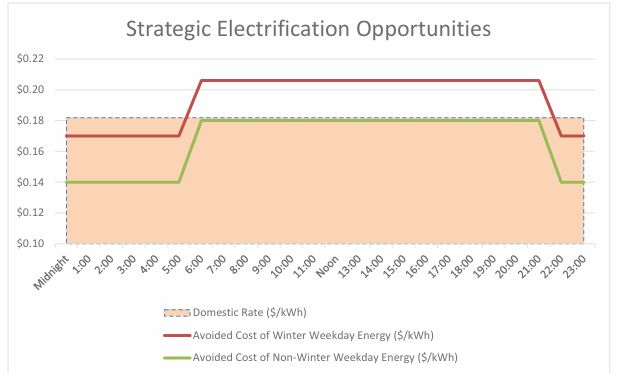
Every furnace and vehicle that shifts from imported fuels to electricity keeps energy spending in the province, and well-placed, well-managed loads help recover grid costs and improve utilization of renewables and infrastructure. The Environmental Goals and Climate Change Reduction Act commits NS to net zero by 2050; widespread electrification is essential to get there.
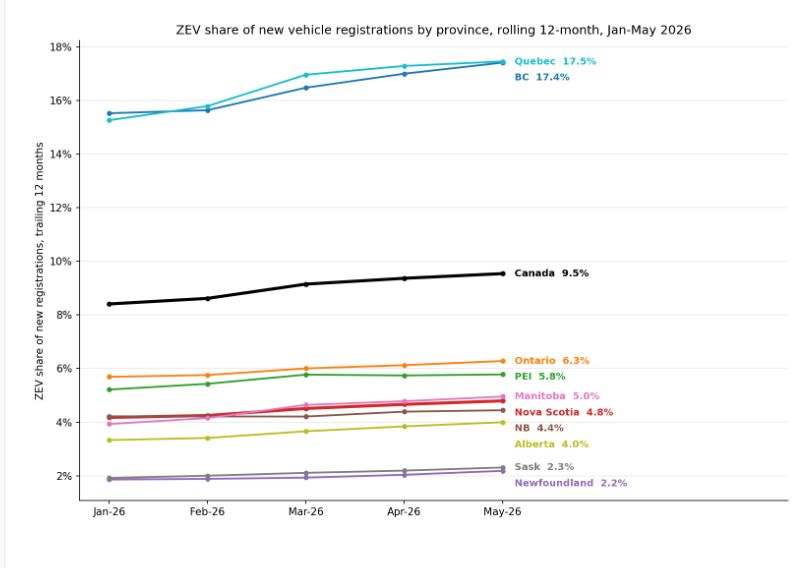
Yet EV adoption trails the pace needed for 30% of new vehicle sales by 2030, and the long-term pathway for oil heating remains unresolved. The demand-side framework now includes strategic electrification, but the cost-effectiveness approach blocks it in practice, leaving no provincial incentives for EVs or oil-to-electric conversions to pair with federal programs. A provincial electrification strategy could include four core actions: 1.
Establish explicit electrification targets for 2035 and 2040, sector milestones for transportation, buildings, and industry, and regular public reporting on progress.
- Modernize the demand-side cost-effectiveness framework so beneficial electrification can compete fairly for funding and incentives. 3.
Integrate electrification more deeply into load forecasts, generation procurement, transmission and distribution planning, and demand-side management.
- Develop sector transition strategies, work with industry, municipalities, Indigenous communities, and utilities on practical pathways for transportation, buildings, manufacturing, agriculture, and fisheries.
Nova Scotia has strong generation targets and a real record on heating electrification. The supply side is underway. It is time to build the demand side to match.