Electrification
The economic cost of Nova Scotia’s dependence on gasoline and diesel
Transportation electrification can reduce exposure to global fuel-price swings and keep more energy spending in Nova Scotia.
Originally published on LinkedIn. This article reflects the information and perspective at the time of the original post.
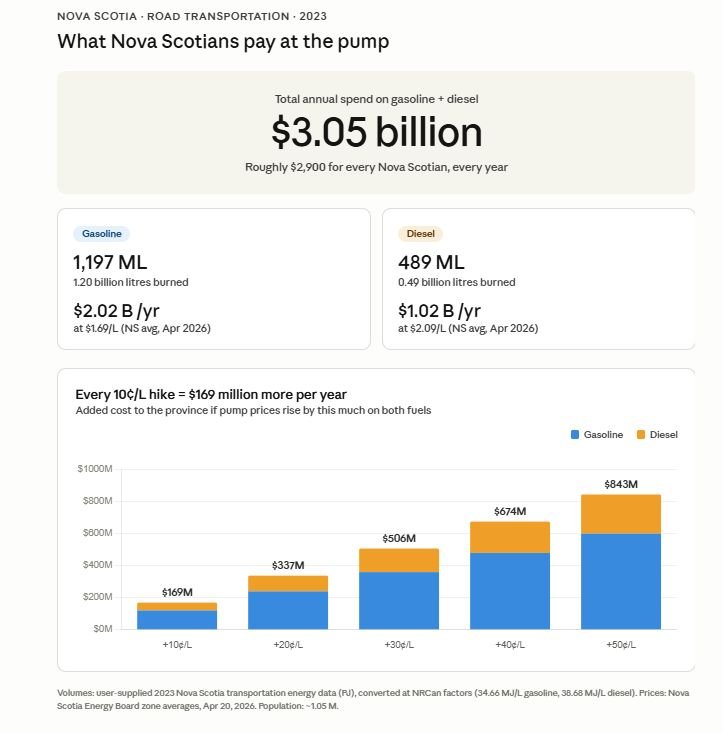
Every 10-cent increase in the price of gas and diesel costs Nova Scotians about $170 million per year at the pump.
Nova Scotia’s passenger and freight vehicles use roughly 1.7 billion litres of gasoline and diesel annually.
That leaves households, businesses, farmers, truckers, and public services highly exposed to global oil price swings driven by international markets, supply disruptions, and conflict.
Offshore oil development is currently being explored but will take years, and any oil produced will likely be refined outside the province, meaning the more we can do to wean off the better off we will be under any scenario.
Electrifying transportation is one of the clearest ways to strengthen energy security, reduce exposure to global oil shocks, and keep more energy dollars here at home.
For long-term affordability and resilience, the direction is clear: electrify