Policy & regulation
Solar Nova Scotia’s five priorities for solar and batteries
Five priorities for net-metering certainty, distributed energy integration, beneficial electrification and regional collaboration.
Originally published on LinkedIn. This article reflects the information and perspective at the time of the original post.
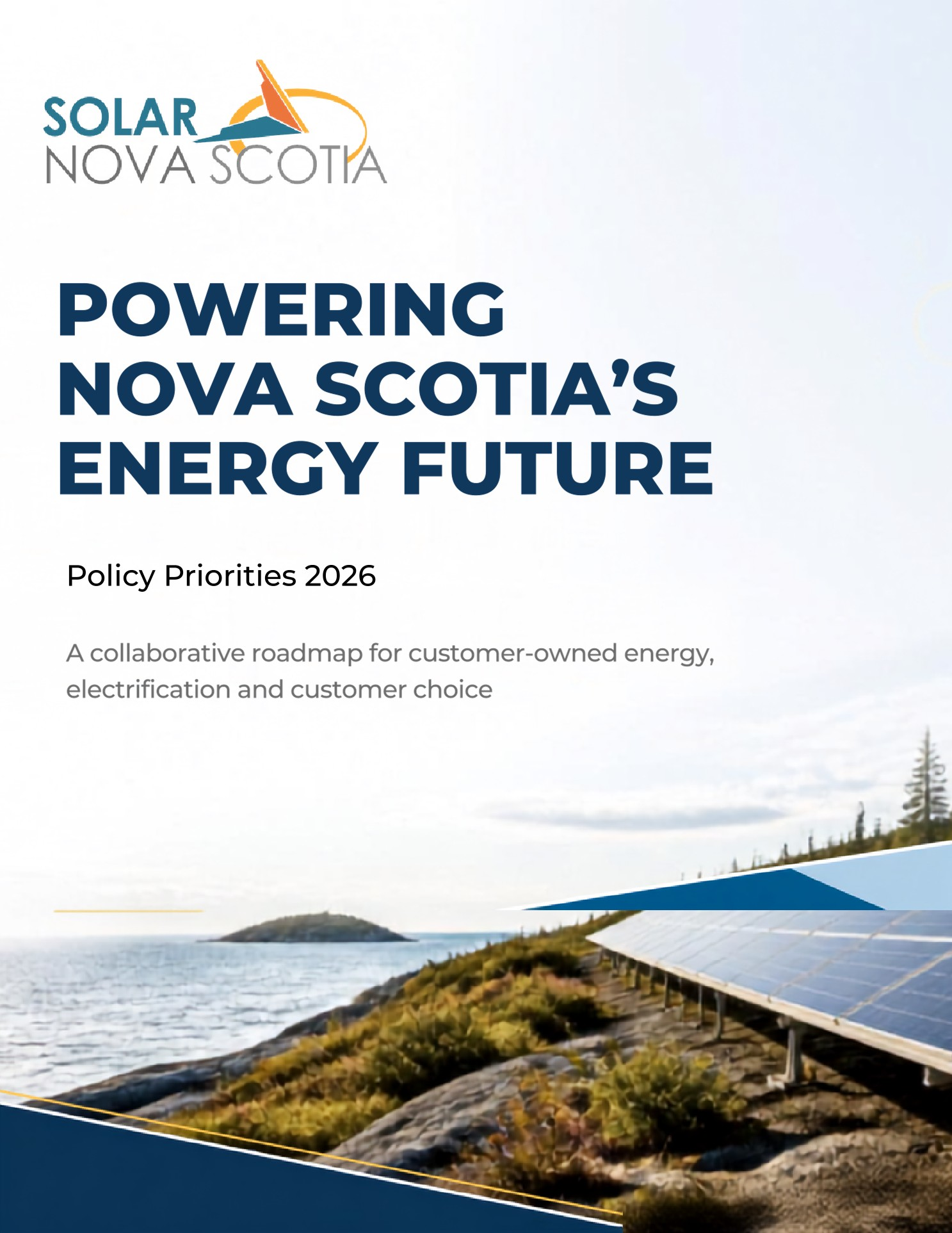
Pleased to share Solar Nova Scotia's 2026 Provincial Policy Roadmap, developed with input from Solar NS members. The Roadmap includes 5 key priorities for the Province to ensure a bright future for solar and batteries in Nova Scotia and full public participation in the energy transition.
- Provide long-term certainty for net-metering Protect against sudden and disruptive changes to net-metering like those seen in other jurisdictions, and work collaboratively with industry on a long-term roadmap that supports continued solar growth and the integration of battery storage.
- Accelerate the Distributed Energy Resources Integration Roadmap Move quickly to implement Nova Scotia’s new DER Integration Roadmap, including compensation and procurement mechanisms that allow customer-sited batteries and other distributed resources to provide value to the electricity system.
- Advance beneficial electrification Accelerate the transition from imported fossil fuels to electricity across transportation, heating, and industry, making better use of Nova Scotia’s growing supply of local renewable energy and preventing future curtailment.
- Deliver on the commitments of the 2030 Clean Power Plan Follow through on commitments including 50–100 MW of Community Solar, 200 MW of new commercial net-metering, and 400 MW of battery storage, with at least 50 MW of behind-the-meter battery storage through an aggregator incentive program.
5. Ensure DERs are part of regional energy collaboration As Nova Scotia pursues greater electricity cooperation and interconnection across Atlantic Canada, ensure distributed energy resources can participate fully and compete to provide energy, capacity, flexibility, and other grid services.
Together, these actions can create a strong and predictable foundation for Nova Scotia’s solar and battery industries while helping build a cleaner, more flexible, and more affordable electricity system.