Battery storage
Batteries versus gas: lessons from PEI’s capacity review
An independent review makes the case for comparing proposed gas capacity directly with a battery alternative.
Originally published on LinkedIn. This article reflects the information and perspective at the time of the original post.
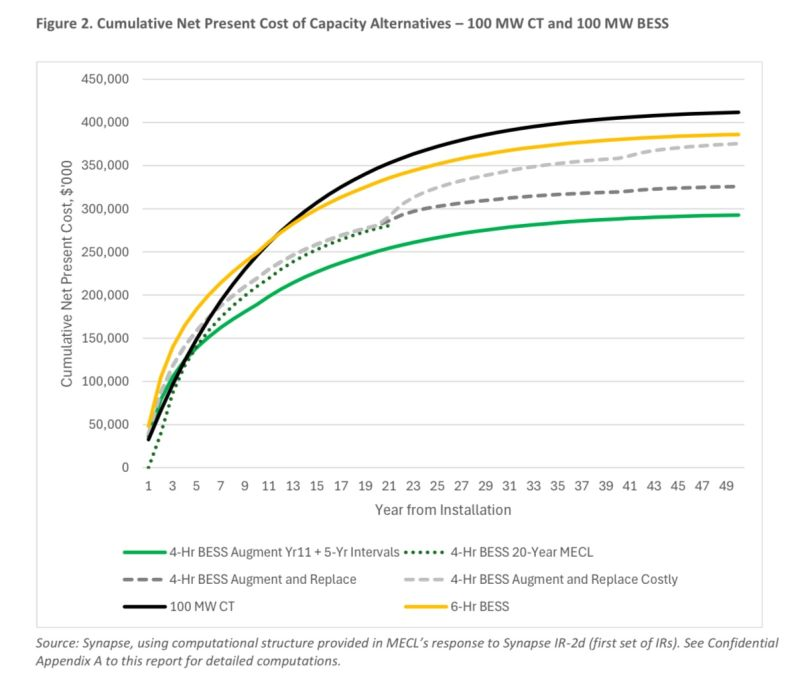
🔋 A new independent report, one that’s likely to draw close attention across the Atlantic Canada electricity community, finds that battery storage may be the smarter bet than gas turbines for Prince Edward Island’s next capacity investment. Synapse Energy Economics has released its final report (April 2026) for PEI's Island Regulatory & Appeals Commission, reviewing Maritime Electric's application to build 100 MW of combustion turbines (CTs) at its Charlottetown plant.
The conclusion is striking: a similarly-sized battery energy storage system (BESS) is the better deal for ratepayers.
A few findings worth highlighting: 💰 Lower cost. A 100 MW BESS, at either 4-hour or 6-hour duration, is cheaper than the proposed CT project on both an installed-cost and net present-cost basis. Notably, this wasn't true in 2022; fossil generation costs have climbed sharply while battery costs keep falling. ⏳ Cheaper even over 50 years.
Once you account for battery augmentation to match the turbines' lifespan, the cost comparison still favors storage in most scenarios. ⚡ Same reliability, more flexibility. Both options reduce curtailment risk on the New Brunswick import line. But "grid-forming" batteries can also keep PEI's wind running during a mainland disconnection, and shift energy purchases to cheaper off-peak hours. 🌬️ Synergy with wind.
PEI wind tends to perform well during the cold, high-demand periods when import risk is highest. Pairing it with storage lets the Island use that clean energy when it's needed most.
The report's core critique: Maritime Electric Company, Ltd never directly compared the cost of its turbines against a battery alternative of equal scale, and the analysis suggests that comparison matters a lot. A good reminder that as the economics of clean energy shift, yesterday's "obvious" choice deserves a fresh look. https://lnkd.in/eDFASCke (opens in a new tab)