Grid planning
Nova Scotia’s changing electricity emissions
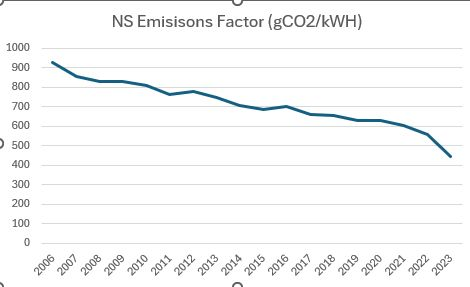
A historical emissions-intensity chart provides context for the changing impact of electricity use.
Informational rewrite based on the original post’s topic and supplied supporting material. The date shown is the original post date; wording reviewed September 2026.
The original post drew attention to Nova Scotia Power’s 2023 emissions reporting. The accompanying chart illustrates a decline in electricity emissions intensity over the period from 2006 through 2023.
Intensity and total emissions are different
An emissions factor describes emissions per unit of electricity. Total emissions also depend on how much electricity is generated or consumed. A declining factor does not, on its own, describe every change in the system’s total footprint.
Nova Scotia Power’s reporting explains that its sales-based intensity accounts for generation in Nova Scotia and electricity imports. Comparisons should use consistent boundaries, units and definitions, including whether the measure is CO₂ or CO₂-equivalent.
For building and transport decisions, a cleaner electricity supply changes the emissions associated with efficient electric equipment. Annual-average factors provide one perspective; they are different from estimating the impact of electricity use at a particular hour.
Utility emissions reporting and definitions: https://www.nspower.ca/cleanandgreen/air-emissions-reporting (opens in a new tab)