Renewable energy
Two Maritime biogas projects reached milestones this summer
Two Maritime biogas projects reached milestones this summer, moving closer to turning organic waste into a local energy resource.
Originally published on LinkedIn. This article reflects the information and perspective at the time of the original post.
Two Maritime biogas projects reached milestones this summer, moving closer to turning organic waste into a local energy resource.
Together, they could produce enough energy to heat roughly 5000 homes.
Both will use anaerobic digesters, large tanks where microorganisms break down organic matter without oxygen, to produce biogas. That gas can then be upgraded to renewable natural gas.
1. Bio Voltex | Penobsquis, New Brunswick
Bio Voltex received provincial environmental approval in about five months, with construction expected to begin in October.
• Feedstock: 115,000–135,000 tonnes annually of dairy manure and aquaculture fish waste, with supply agreements involving seven New Brunswick farms and aquaculture companies.
• Output: Up to 200,000 GJ of renewable natural gas annually.
• Intended use: Electricity generation for a New Brunswick buyer, with Énergie NB Power in discussions.
• By-product: Digestate fertilizer returned to participating farms.
Read the CBC article: https://lnkd.in/gZANJP_9
2. Halifax Water | Biosolids Processing Facility
Halifax Water’s latest annual report indicates that the RFP process for its new biosolids processing facility has been completed.
• Feedstock: Material from wastewater treatment plants and septic systems, with capacity to process 75,000 tonnes annually.
• Output: Up to 200,000 GJ of gas annually, according to the previous year’s annual report.
• Investment driver: The existing Aerotech facility is nearing capacity, the region is growing, and secondary wastewater treatment requirements taking effect by 2040 will increase biosolids volumes.
• Goal: Recover nutrients, water and energy from material that already requires treatment and disposal.
Read more about the Halifax Water project: https://lnkd.in/gxjBnvXA
Biogas is a renewable fuel made from organic material. It can reduce greenhouse gas emissions by replacing fossil fuels and capturing methane that would otherwise escape as waste decomposes.
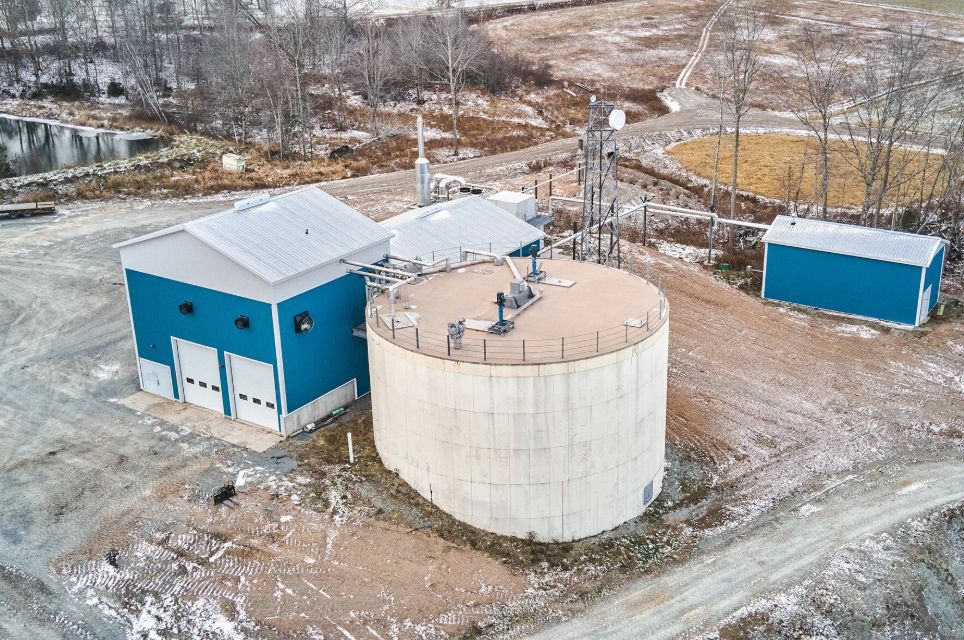
The photo below shows an earlier Nova Scotia example: Courthouse Hill Farms, which uses manure and other organic waste to produce heat, electricity and fertilizer.
Read about Courthouse Hill Farms: https://lnkd.in/g8TjEERQ
Net Zero Atlantic is also researching organic waste diversion and biogas technology adoption in New Brunswick.
Explore the research: https://lnkd.in/g7v2JjpF