Electrification
Electrification and the 2035 ambition
An Atlantic Canadian energy-use comparison puts a broader electrification ambition in regional context.
Adapted from David Brushett’s original LinkedIn commentary. The date shown is the original post date; wording reviewed September 2026.
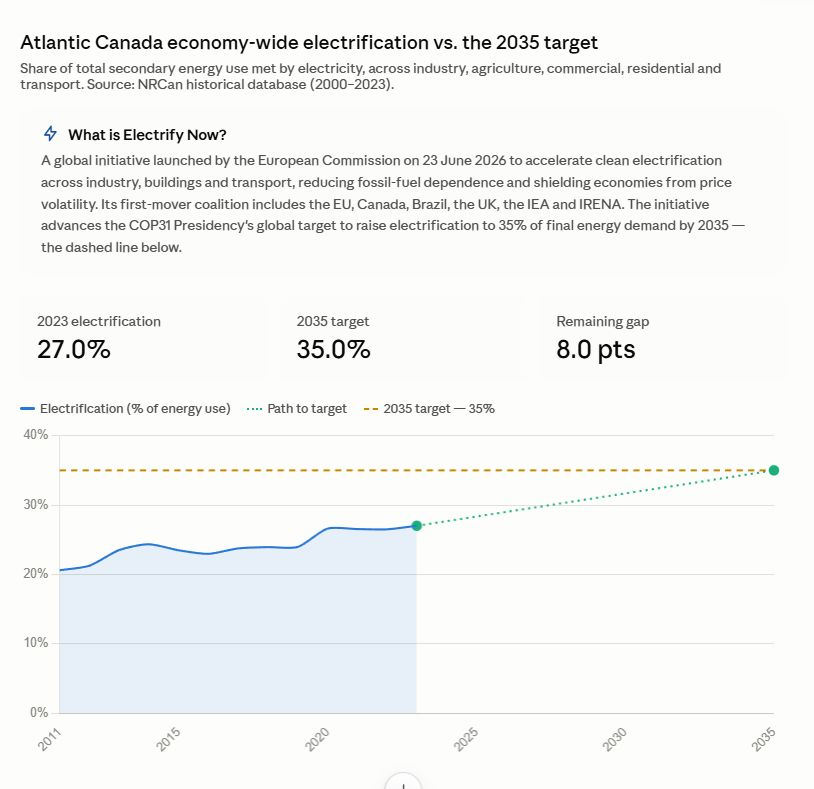
The original post discussed the Electrify Now initiative and its stated ambition to increase electricity’s share of final energy demand to 35% by 2035. It used Atlantic Canadian energy data to put that ambition in regional context.
The accompanying analysis reports electricity meeting 27% of Atlantic Canada’s secondary energy use in 2023, compared with approximately 21% in 2011. It draws its historical series from Natural Resources Canada’s database.
An ambition is not a forecast
The dotted line illustrates a path from the regional historical figure to 35%. It does not predict actual uptake or establish a regional policy commitment. Comparisons also need consistent definitions of final or secondary energy and sector coverage.
Electrification requires coordinated changes in buildings, transport and industry as well as electricity supply. Efficient equipment, grid planning and demand flexibility can help those changes reinforce one another.
The useful question for Atlantic Canada is how to expand productive uses of electricity while managing the timing of demand, customer costs and the infrastructure required.