Demand response
Time-of-use versus critical peak pricing: how they differ
Two approaches to electricity pricing reward different kinds of flexibility in when households use energy.
Originally published on LinkedIn. This article reflects the information and perspective at the time of the original post.
Nova Scotia Power announced last week that its Time-Varying Pricing Pilot will resume on November 1, following a pause after the March 2025 cyber incident. For 2026/27, it’s returning for existing participants only. Participation remains voluntary, with no announced plans to make these rates mandatory.
The pilot offers two approaches: 🕒 Time-of-use: shift your everyday habits. From November through March, weekday peak hours are 7–11 AM and 5–9 PM. Electricity costs twice as much during those hours as off-peak. Charging your EV overnight or running the dishwasher after 9 PM can help. Participants have reduced peak demand by 7–8%. ⚡ Critical peak pricing: respond when it matters most.
Participants get a roughly 16% discount year-round, but pay ten times the standard rate during four-hour events on up to 18 winter days. Notice comes by 4 PM the day before. Participants have reduced demand during these events by 25–28%, or about 0.6–0.8 kW per household.
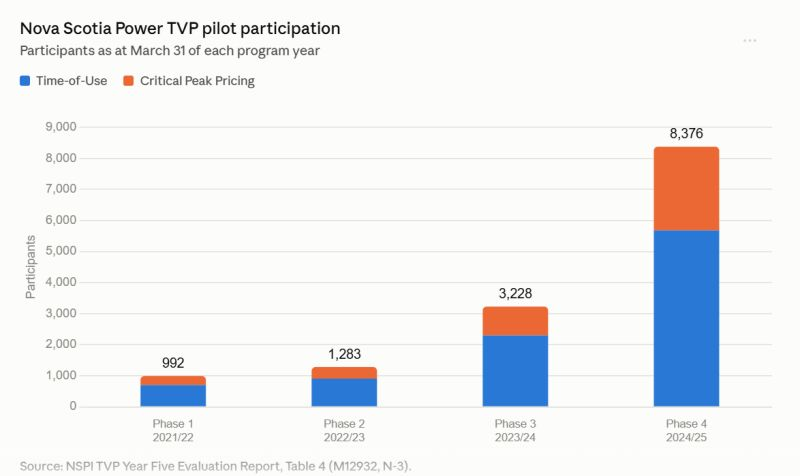
Before the pause, around 8,400 customers participated. Another 13,000 (not on the chart) use NSP’s separate Time-of-Day rate for homes with qualifying heating systems like ETS. That’s more than 21,000 customers already using some form of time-varying pricing.
As more wind and solar join the grid, shifting when we use electricity becomes increasingly valuable. This pilot shows that Nova Scotians will respond when rates make it worthwhile.