Demand response
Halifax airport puts existing assets to work for the grid
A demand-response project shows how existing backup equipment can help during peak periods while preserving emergency readiness.

Originally published on LinkedIn. This article reflects the information and perspective at the time of the original post.
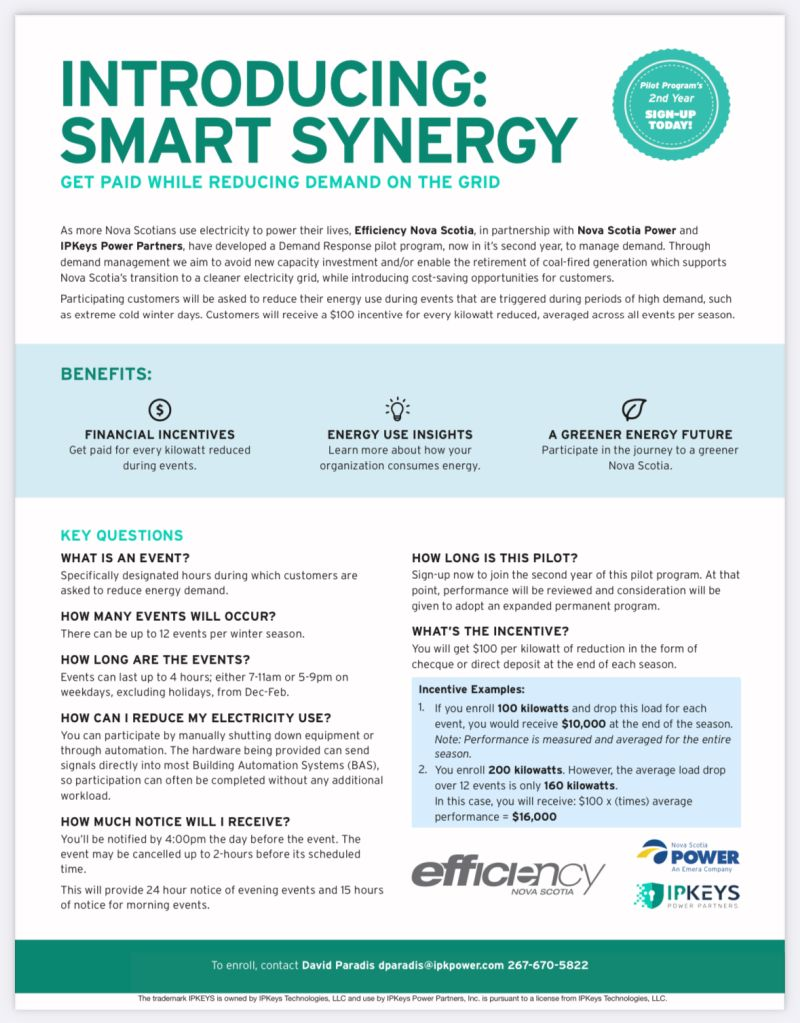
Halifax Stanfield International Airport is showing how infrastructure we already have can help meet Nova Scotia’s peak electricity needs. Through EfficiencyOne’s Smart Synergy Demand Response program, the airport reduced demand on the grid by 2.35 MW during winter 2025–26 peak events (roughly .5% of the year), using its existing standby diesel generators while maintaining normal airport operations.
The incentives earned also supported reinvestment in its facilities and further decarbonization initiatives.
For Nova Scotians, the potential benefits extend beyond the airport: less pressure on the grid when demand is highest, better use of existing investments, and an opportunity to defer costly new peaking capacity ($3 Million/MW), helping contain the costs that ultimately flow through to ratepayers.
Diesel generators still produce emissions, and whether they match or improve on fossil peakers depends on their efficiency and the generation they replace. The opportunity is to use existing equipment strategically in the short term while reducing the need for additional, long-lived fossil-fuel infrastructure. I think this is a smart approach to overall emissions reductions in the Province as battery technology, which improves every year, matures as a longer term solution.
This approach has potential at other facilities across Nova Scotia with suitable backup generators. It is also worth considering when backup systems are installed or replaced. Replication requires the right controls, metering and coordination, with emergency readiness built into the plan.
Kudos to EfficiencyOne, the energy manager and business development teams, Edgecom Energy and the Halifax Stanfield team for demonstrating a practical way to put existing assets to work for Nova Scotians.