Grid planning
Why wind and solar complement each other in Nova Scotia
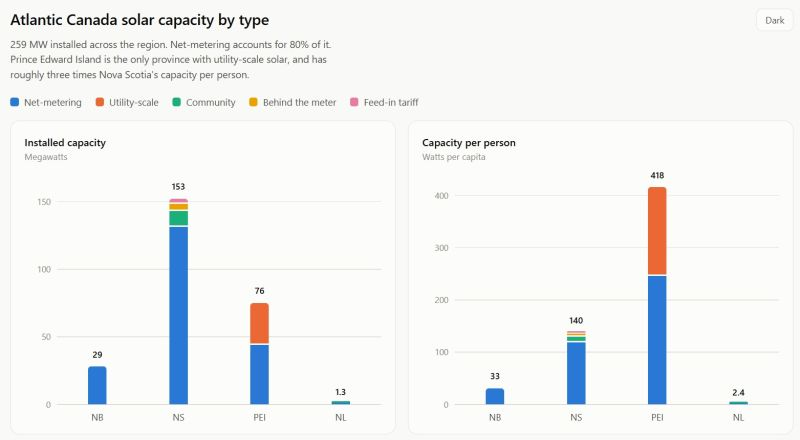
Seasonal wind generation patterns help explain the complementary role of solar in Nova Scotia’s electricity supply.
Originally published on LinkedIn. This article reflects the information and perspective at the time of the original post.
Nova Scotia is becoming a wind energy powerhouse.
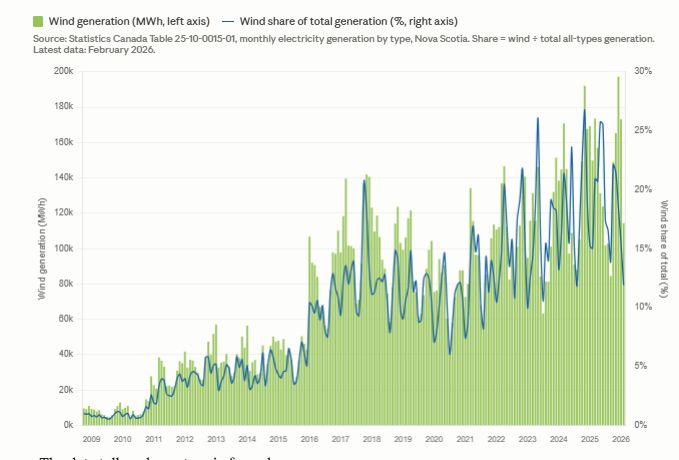
This chart, based on Statistics Canada data, shows monthly wind generation in Nova Scotia since 2008 in MWh and as a percentage of total electricity production.
Nova Scotia currently has about 623 MW of onshore wind capacity. The Province’s 2030 Clean Power Plan calls for an additional 1,000 MW of onshore wind by 2030.
Looking further ahead, Nova Scotia is exploring the development of up to 60,000 MW of offshore wind potential.
That is a major shift for a province historically dependent on coal, and a sign of how quickly the electricity system is changing.
You can see the dips in production every year over the warmer summer months. This is the time of peak solar production and shows how complementary the two energy sources are.